Thursday, March 30, 2006

Very Intelligent use of taxonomy and RSS feeds

uBioRSS implementation from uBIO is really beautiful. One can browse the feeds using the taxonomy. This is just great. Basically using the metadata one can implement a nice faceted search or guided navigation with RSS feeds. via Richard Ackerman

uBio has also some very interesting applications

Tuesday, March 28, 2006

Towards 2020 Science

I have not read this report (pdf) that was produced by Microsoft Research yet competely but i see some very useful points for anyone who is in the STM field. via Stephen Abram

Dr. Timo Hannay from Nature was in the workshop which resulted in this document. No one from Elsevier was in the workshop, I don't know how we missed this or the criterial that Microsoft used to invite. Nature also has a special edition on the same topic.

Sunday, March 26, 2006

A new Service from Japan Science & Technology Agency

JST is launching a new site called Journal@rchive More about this iniative via Michael Engel through Chemical Information Sources Discussion List

Shopping in Albert Heijn in Amsterdam

I am in Amsterdam for few days and yes, I am going to meet with my colleagues Behind the Bars and we'll hopefully have few drinks.

Talking about drinks, I went to Albert Heijn to get some wine and mixed nuts ( I really did not want to spend 4 Euros in Marriott for cashews where I can get it for 1.99 Euros ) My total was 8.98 and gave 9.00 and the cashier did not return any money back and started working on next customer's order. I am not in the 2 cents but it's customers decision if they want to leave the 2 cents with the company. I asked for my two cents while she started scanning the next customer's order and she checked with another cashier for there was a request "out of the regular". After 1 or 2 minutes she gave me my 2 cents. Now it was the time for me to find a bag to put my bottle and nuts. I might be wrong but I think they charge for the good plastic bags for she told me that I can use for free ones that they have in the checkout which I would not trust that it would hold my wine bottle. Why would you charge for a bag? My local market in Avenue B which is a family business and no close to Albert Heijn in terms of revenue does not charge me. I don't wonder why Albert Heijn is loosing market share...

Saturday, March 25, 2006

Comparing Scopus & Web of Science and importance of proper use of thesaurus

Lars Iselid from Umeå university Library is documenting a Swedish BIBSAM-project in his blog. This is an excellent way using a blog. He has some very good points about control vocabulary and thesaurus searches.

If you are interested to find out more about Scopus, Web of Science and Google Scholar check his blog.

I am surprised that no one from Scopus and Web of Science is commenting about his remarks about these products. Folks, you like it or not, it's time to engage and have a conversation with the customers


Here is more on the project

"This blog was set up (January 2006) with purpose to make critical
assessment of the multidisciplinary citation databases Web of Science,
Scopus and Google Scholar. The assessment is done according to a Swedish
BIBSAM-project with the project title:”Analys av Google Scholar och
Scopus i jämförelse med Web of Science”.

The use of a blog is a method to document the assessments within the
project and the way we try to get input from readers through blog
commentaires. The main purpose of the blog is not to be a working dairy
of the project or a news announcements blog, but more of a documentation
blog. The blog contains not only blog entries, but also these
documentation pages"

"Talking with Elsevier" and Listening to and Trusting the customer

T. Scott Plutchak who is the director of Lister Hill Library of the Health Sciences was a guest in one of the sessions in Miami where our top Elsevier senior executives were meeting for 3 days

via William Walsh Issues in Scholarly Publications

Here is what Scott said about the meeting in his post


"I was with a dozen or so senior managers, and was speculating about what it might be like if a library director like me could use Elsevier almost as a consultant, who would come in and help me work with my faculty to analyze my institution's information management needs and come up with a multi-year plan that was carefully tailored to our institution's priorities and goals. "But would librarians trust Elsevier enough to do something like that?" came the question. "No," I said, without hesitation. "And that's just a reality that you're going to have to deal with, and figure out how to change. It will only happen bit by bit."

In order to establish trust with librarians and end users, we have to listen to them, we have to communicate with them more openly and we have to involve them in our business (in product development and strategy decisions too), and we also have to trust them. Life and business is all about trust and honesty. As Guy Kawasaki says just being a "mensch"

Here is Scott again:

"It's too bad that more librarians can't spend the kind of time with some of the senior people at Elsevier that I was able to this week. It's tough to demonize people when you've had food and drink with them and have talked passionately about what you believe to be the social importance of what you're doing. And make no mistake -- the people I talked with do believe passionately in the role they play in the whole knowledge creation chain. They believe they are doing good things. I was very impressed with their openness, their eagerness to listen to what I had to say, and their very thoughtful questions and discussion."

Yes, we are passionate with what we are doing and we are no different than our customers. We have bills to pay, we have kids to help with their homework, we have student loans and mortages to pay, we are single parents, we have parents to take care of, we wait for April 15th to get all the forms together for taxes (ok this year is the 17th), we call AAA when the car brokes, we complain about transit system or the war in Iraq, or the democrats or the republicans. We are like one of you just working for a great company called Elsevier. As our CEO Erik Engstrom put it nicely in a recent Town Hall meeting in New York
“The real reason we’re here is to make genuine contributions to the science and health communities. This is the very nature of our business and underscores Elsevier’s history of contributions.”
I think the more you know us and Elsevier, the less you'll demonize us.

It's also our role to reach out and bring more of our customers in touch with our senior managers and our employees like we did in Miami. We need to spend more time in listening and understanding our customers and also explaining them what we do and why we do it. As they said in cluetrain, "markets are conversations" and "markets consist of human beings."

Wednesday, March 22, 2006

A cool Business Directory from Down Under

Hotfrog ( a reed elsevier business) is using clouds in their entry page.

Tuesday, March 21, 2006

NASA launches Knowledge Net to Prevent Mistakes

I wonder how many corporations are using these kind of tools i.e expertise management that NASA is implementing.

Tacit , CominTell and Askmecorp are few of the companies in this domain

Gabbly Chat

Using Gabbly, Chat with anyone on any website. I am still trying to figure out this. Again experimenting in this blog. So if we enable EV2 for this, does it mean that anyone on EV2 can chat? via SiliConBeat News


Update: If we enable it, it seems that everyone on EV2 can communicate with each other.

Healthline partners with medical reference publishers

Healthline which Reed Elsevier Venture is an investor created content partnership with A.D.A.M., Cerner Multum, ProQuest Information and Learning and Thomson Gale.

Suprsingly there is not an Elsevier content syndication deal with Healthline.

Elsevier's Podcasts

According to Association Online Publishers 1/3 of UK publishers are podcasting. via Information World Review

I am glad to see my colleagues from Elsevier Health Sciences took the lead in Elsevier and started podcasting at MediaNewsPodcast and Lancet. here is this week's mp3 from lancet.

Now we need to use their experience in our Science & Technology Division.

Red-Hot or Red-Hot Chili peppers (research papers)


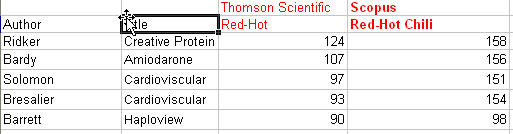
Thomson Scientific announced their 'Red-Hot' Research Papers of 2005


Above is the top 5 research paper and citation number as of December 2005. The excel shows the same articles' citations in Scopus for 2005 excluding 2006 their citations. I don't want to get more confused so I am not going to check Google Scholar. This is like NASDAQ and Dow-Jones index.

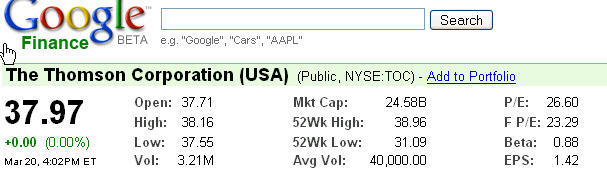
Largest Market Cap for a TOC


I always thought that TOC stands for Table of Contents until few weeks ago I noticed that TOC was the sticker symbol for Thomson

The image is courtesy of the new Google Finance

Monday, March 20, 2006

Leverage other users' searches

Prefound aims to eliminate duplication of searches by leveraging collaboration tools. via LibraryClips

"PreFound.com allows human users to (a) see what other humans have gathered by-hand from all places on the web, and have shared with the PreFound.com community and (b) gives these human users a technology which allows them to easily and efficiently gather and tag this information, then share it with the PreFound.com community if desired. After all, communities of knowledgeable, interested people can identify relevant sites with greater accuracy than a search engine, even ones with a complicated search algorithms like Google. Plus, you can leverage the work already done by others and build on that base rather than repeat it. In this way, we provide a platform that allows users to search what has already been found on the web! Pre-Found!" via prefound

A new Beta from Reed Business: Zibb

Zibb "The global business search engine" is a new Beta from Reed Businees (an Elsevier parent company)

It has some interesting feature like suggestion of search terms and filtering option at the bottom of the page (I would have like them at the top)

Their product and services section are powered by KellySearch another Reed business product.


Here is more about Zibb:

"Zibb is the business to business search engine of Reed Business , the premier provider of business information to the world. It includes content from across the entire Reed Business portfolio with the addition of selected business to business websites outside of Reed Business.

The aim is to provide our users with the most comprehensive, accurate and rapid answer to the specific question that they need answered. By focusing on what we know best, and by filtering and organising a combination of web, blog, directory and reed business content, we believe that we can provide the best results for our business users."

Aggregate the buzz

Popurls by Thomas MarBan

via Marc Canter

ISI (Thomson), Scopus (Elsevier) and now EBSCO with Citation Database searching

EBSCO "is now producing comprehensive citation indexing for literature in the disciplines of business, communication & mass media, nursing & allied health and sociology. Existing customers of EBSCOhost databases can now gain significantly improved access to citation indexing in these disciplines." via KnowledgeSpeak

I think with their new Grokker Groxis implementation we can expect some cool citation visualization fom Ebsco in the future.

Sunday, March 19, 2006

List of "Web 2.0" companies

I am not a fan of using the term "Web 2.0" ( I was doing e-commerce for a Web 1.o company which looked very Web 2.o in 1999. When no one was tagging Bolt community users were tagging each other) but here is "the list" Via Scoble Original compilation by Bob Stumpel

Plenty of companies under collaboration and community categories.

Saturday, March 18, 2006

Can this be the secret for Nature's product innovation

Here is Richard Charkin's comments on Connotea and their new release of Connotea feature for Eprints. Richard is the CEO of McMillan, Nature is a division of McMillan.

"Where will all this lead? Frankly, we're not sure. But the use of communal data such as shared bookmarks and tags (and the collective taxonomies, or 'folksonomies', that arise from them) is already attracting a lot of interest among clever researchers who are developing ways to manage information in this era of over-abundance. We at Nature think that collaborative services like Connotea will become an important part of the answer, and when that happens we want to have a role to play. That's how publishers can stay relevant even as the world around us passes through its most disruptive period since our industry came into being." [bolding is mine]


I think we should all learn from this. They are not sure, but they are taking risks to experiment and test.


Post Note and Clarification: The above quote is not Richard's but Timo Hannay's. Please see the comments from Timo. Thanks Timo for the comments and clarification.

Collaboration, Networking and Knowledge Sharing Services


Oyogi (via ehub), Siphs (for life sciences) and Yedda (via TechCrunch) ....

These services have some features that some of you may remember if you were using using Engineering Information Village in 1995. I believe enabling knowledge sharing and collaboration within engineers was one of the goals behind the Engineering Village concept, but I think Ei team was ahead of their time beacuse they did not have these easy tools to really execute on the concept. With the success of Connotea and ease of access to information globaly, I bet we will see some interesting applications in our space that will enable the scientists and the engineers to easily share and collaborate their knowledge. It will be interesting to see what Google Scholar team is going to do with collaboration.

Thursday, March 16, 2006

Coot Stuff from Nature (once more)

Excellent initiatives from Nature and Connetea team.

"One general problem with IRs is that, notwithstanding services like Google Scholar, a lot of their content isn’t very easy to find, and it certainly isn’t easy to browse between related items in different repositories. Our new code aims to improve things by allowing IR users to tag articles and see links to related content, all from within the IR web page itself. Behind the scenes, the software communicates with del.icio.us and/or Connotea (Nature’s own social bookmarking service for scientists). "


via Timo Hannay Director of Web Publishing at Nature at You're it

Colleagues Blogging (now behind bars)

Last week I noticed that two of my colleagues Michiel van der Heyden and Ale de Vries from Science Direct have started blogging. I started this post to mention about their blog and to direct my readers to their blog to see what they are talking. When I went to their site I noticed this post stating that now they are going "behind bars". I don't have a clue why they went behind bar?

Wednesday, March 15, 2006

SAE, Compendex and sponsorships ads

Dana Roth brings up the issue of SAE coverage in Compendex at Online Databases blog. Unfortunately since the last postings which Randy Reichardt summarized it, there hasn't been any change. We have approached them in 2005 but we still don't have their Ok to cover their publications.

Dana also points to a link where you can search SAE data going back two years. I like the way they are including sponsorships ads in their results

Canary database


A new beta product from Yale University leveraging faceted search and visualizing the results.

Nice way of using and/or within the facets. One thing that I would suggest is to put the counts in the facets.
via David Stern's (Head of the Science Libraries at Yale and Editor Elect of Science & Technology Libraries) email communication in Chemical Information Sources Discussion List.

Sharing Knowledge by putting the dissertation online

Good move by Kansas State by putting Doctoral and master dissertations online:

"The thesis will be indexed by Web search engines," [Marty Courtois, computer information specialist at Information Technology Assistance Center] Courtois said. "Google has also agreed to include them as a part of Google Scholar."

via Kansas State Collegian

Tuesday, March 14, 2006

Lisa A. Hook appointed to the Board of Reed Elsevier


Here is the announcement


Lisa was the was President of AOL Broadband, Premium and Developer Services and a Vice President at Time Warner Inc. where she managed corporate transactions, mergers and acquisitions.

Who knows with her experience with can bring more fun into STM and we can make sharing of scientific knowledge more entertaining.

Sketchup

Skecthup was acquired by Google. via Google Blog

Here is how their customers have been using the product:


  • "Communication tool"
  • "Problem-solving tool"
  • "Productivity tool"
  • "Creativity tool"
  • "Problem-finding tool"
  • "Mass modeling tool only, not for presentations"
  • "What-if tool"
  • "Teaching tool"
  • "Prototyping tool"
  • "Design tool"
  • "Best sketching tool ever"
  • "Draft preparation tool"
  • "Marketing tool"
  • "Visualization tool"
  • "Level design tool"
  • "Consultation tool"
  • "A form of therapy"
  • "Understanding sunlight dynamics""

Now if I wanted to create some speculation, I would say "After acquiring Writely, Google is getting into engineering workflow solutions"

Ranking of Top Patent Assignee Companies from USPTO

I mentioned irows before, I just discovered that they have an interesting way of letting user collaborate. One can post their data on their blog and let others manipulate the data. I am experimenting with this at this url

Monday, March 13, 2006

Single search box and what else?


Lorcan Dempsey mentions that people are talking about "the attraction of the simple, single box search as the ultimate goal" and his reponse to this is " 'yes, and what else?'.

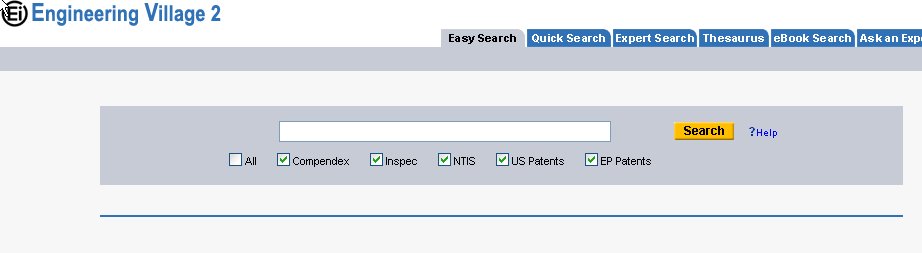
One of the what elses can be Search without a Box, until that time we should improve the personalized/contextual search, help the users create their own taxonomy, and levarage the faceted searching as we do in Engineering Village Easy Search interface.

Sunday, March 12, 2006

Digitization, one global library, and sharing knowledge

"As we put our works on line, we'll only need one library and will have multiple knowledges. Why have more than one library when you can link to and aggregate whatever you need? Oh, the library will be distributed and portions will be replicated for safety's sake — we will have learned something from Alexandria — but that's just an implementation "detail." When all our works are digitized, a local library will be nothing but a playlist."

via Dave Weinberger

Scopus, Web Of Science, and Engineering Village


It's not the real usage but it's fun to see it using the new Alexaholic

Calcoolate


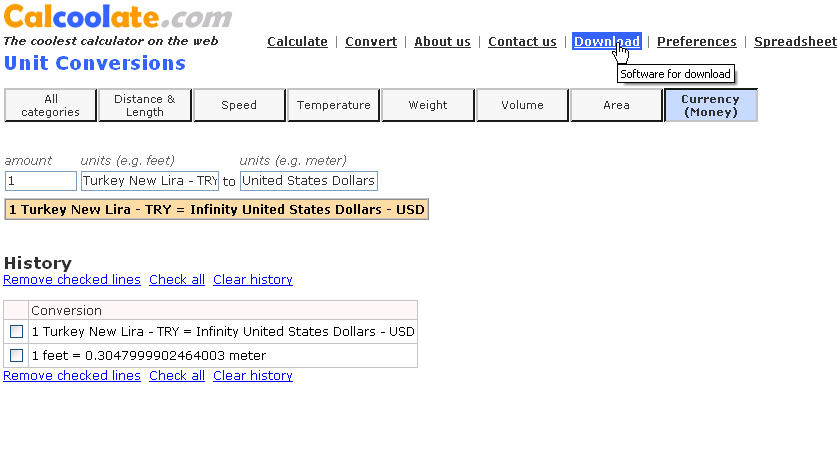
I wish the following conversion rate was correct. I could have replaced Bill Gates at the Forbes list(I bet that they will fix this soon. )

Colcoolate is a calculator and conversion application using AJAX. via Techcrunch I like their philosohpy too "Everything should be web based."

the way that they are doing the session history is very nice
The duo Itai Raz and Yoah Bar-David have another application called irows. Worth checking it out.

Saturday, March 11, 2006

Why librarians like faceted searching

Christina Pikas explains the value of faceted searching from ASK model (anomalous states of knowledge) perspective.

Friday, March 10, 2006

Jackie Mason, The ironies of the cartoon jihad, Free Speach and Lazio's Captain

"Nobody has ever died from a cartoon. If the worst thing the Nazis ever did had
been to draw cartoons of death camps instead of putting Jews in them, six
million Jews would be alive today. When was the last time any country
decided to kill a Muslim anywhere in the world because they felt insulted?
But the Muslims have created a new international law called the "insult
law." This means they have the right to kill you whenever they please, and
you have no right to do anything about it. If a Muslim were walking down a
street in Israel with a picture of an insulting cartoon in hand, no Israeli
would threaten his life. They would be too busy celebrating the fact that it
was a cartoon and not a bomb. " link via Dave Winer

and here is Lazio's Captain Paolo Di Canio who was punished in the past for giving a Nazi-style salute meeting with Italians Jews who survived the Nazi death camps. via BBC News


Patent Question of the Week

What's the name of the company who has the most patents in the US and European Patent databases on "nanoparticles"?

Please indicate how long did it take you to find the answer too.

Light Emitting Diode (LED) and Open Source Creativity


Here is how you can bring some lights and fun to your neighborhood with LED Throwies

Eyebeam OpenLab based here is NYC is behind this and other creative projetcs.

Here is more on Eyebeam:

"The Eyebeam OpenLab is a home for artists, engineers and hackers pioneering
open source creativity. The first initiative of its kind, the lab is focused
entirely on incubating experimental technologies and media that directly enrich
the public domain. With funding from the MacArthur Foundation and others,
Eyebeam has awarded fellowships to a talented, interdisciplinary group of
OpenLab fellows who work in a new facility equipped with a laser cutter, 3D
printer, workstations, web servers, and electronics workbenches. These fellows
are already generating ideas and building new projects, extending the innovative
work of Eyebeam R&D."

Blue Ocean Strategy and making competition irrelevant


I haven't heard Blue Ocean Strategy before, but while I was reading the following notes from Rajesh Jain's Blog, I recalled a conversation that I had years ago with Bernard Aleva who was the CEO and President of Ei at the time (now he is Publishing Director for Life Sciences at Elsevier) and telling him that I would never base my product development strategy on my competitor because if I start copying them I will be making the same mistakes and there won't be any differentiation between my product and the competitor's product, and at the end the customer will buy the least expensive one.

Customers do not want me-too products.


"Blue ocean strategy is about creating uncontested market space. Too many companies are swimming in the red ocean of bloody competition where there is limited room for real growth. The image of the vast blue ocean conveys the infinite possibilities for profitable growth that exist with this strategy.

Value innovation is a strategic move that allows a company to create a blue ocean. Typically, companies in the red ocean pursue incremental improvements for customers through either low cost or differentiation. Value innovation helps companies make giant leaps in the value provided to customers through the simultaneous pursuit of differentiation and low cost.

It shouldn’t be a trade off between the two; exceptional value and innovation should be inseparable. Offer buyers a huge leap in value, and that will give rise to new markets. That’s how you make the competition irrelevant.

We begin by giving companies three pointers on how to break out of the red and into the blue ocean. Number one: stop benchmarking the competition. The more you benchmark your competitors, the more you tend to look like them. That makes you a me-too organization, which is the opposite of what you want to achieve.

Second: stop being content to swim in the red ocean. Many companies are caught up in competing and don’t even look to the horizon of the blue ocean. And third: don’t count on your customers for growth. Look to non-customers; they provide the most insights into how you can create new, uncontested opportunities— new demand for your products or services." via Emergic [bolding is mine]

Thursday, March 09, 2006

"Search without a box"

Andrei Broder's (VP of emerging search technology for Yahoo) views on where the search is heading:

"Search today is confined to putting in something and getting something back, a pull model. The next stage is for information to come in a context without actively searching, a push model. My favorite example is GPS. Instead of looking up your way on a paper map, you are in your car, and your GPS navigator gives you directions, shows gas stations near you, and so on. A year or two from now perhaps it will show you where those gas stations are, but only when you are low on gas. So you get information on an “as needed, when needed” basis without explicitly asking for it. In the same vein, we will move from information retrieval to information supply"

via Yahoo Search Blog

Currently we are using FAST as our search engine in Engineering Village and I hope their researchers are paying attention to what Andrei is talking about supplying information within context.

Competitive Intelligence, RSS, Honeywell and Engineering Village

That's how Honeywell an Engineering Village customer is leveraging RSS for their employees.

Kudos to Honeywell eLibrary team being an early adaptor in RSS and using a Blog in their communication with their employees.

The Honeywell Technology eLibrary Compendex service now includes abstracts of patents and patent applications from the the USA and the EEU. Using eLibrary's RSS service, you can set up automatic feeds and be informed whenever a competitor or customer starts to "play" in a particular sandbox
via Honeywell Teched RSS Feed

Google Scholar and findability

In his presentation, Dean Giustini from University of British Columbia is calling libraries to work with Google Scholar.

In slide 8 Dean lists that "Fast, easy to use, easy to navigate" as a plus for Google Scholar. May be Dean and I look at the navigation from a different perspective, but I differ on the ease of navigation for Google Scholar. I think there is no navigation in Google Scholar, just a listing of a bunch of records which I call "dumb records". When Google Scholar team starts doing clustering and faceted searching with their search results, then I'll be able to navigate easily. Right now I am just getting records with no intelligence and no taxonomy which can help me in findability.

Dean finishes his presentation by a quote from John Regazzi who is the visionary of the Engineering Village concept when he launched it in 1995 and now the Dean of College of Information and Computer Science at the C.W. Post Campus of Long Island University.

"There is no guarantee that the "free" search engines of today will be free in the future, but the shift [to free] is significant...as is illustrated by the mindshare gains made by search engines" full article
via William Walsh

Diodes and communicating emotions


My colleagues always tease me when I show Engineering Village and start doing a search for "diode".
Since childhood I was fascinated with little light/bulbs ( so much that one day they took me to the hospital to take out an old radio's bulb that I put in my noise.)


Later on in college, I switched to Light Emmitting Diodes. (LEDs)


And now when I see this kind of research I really like it.

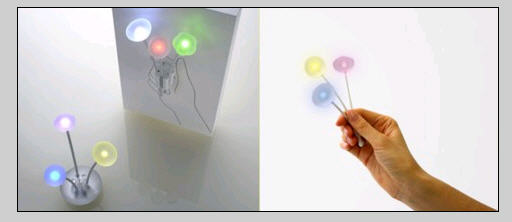
"NEC, NEC Design and SGI Japan have teamed up to develop KOTOHANA, flower-shaped terminals that use LED light to remotely communicate human emotions."
Once it's in the market (and if it's not too much expensive) I'll get one and put in my officeLED.

So is this the end of How are you, thank you, good; how are you, good, thanks like questions in the offices?
Just check the lights on my flowers, and understand how I am doing, start asking" hey why are you so happy?

vias: a new pre-filled aggregator MyToday and Paulo Valdemarin


btw for all the LED enthousiasts here is a record from 1962 on LED from Engineering Village

Injection electroluminescence at p-n junctions in zinc-doped gallium phosphide
Starkiewicz, J.; Allen, J.W. Source: Journal of the Physics and Chemistry of Solids, v 23, n 7, July 1962, p 881-884 Country of publication: UK (subs req)

and a patent related to LED from 1966

Photoelectronic semiconductor devices comprising an injection luminescent diode and a light sensitive diode with a common n-region
KURT WEISER; LEVITT RALPH S Publication Number: US3283160 Publication date: 11/01/1966 (subs req)

Wednesday, March 08, 2006

Wal-Mart, PR strategy with bloggers, Transparency and Trust

Walmart has developped a PR strategy with bloggers. Edelman is hired to establish the link with the bloggers. As Jeff Jarvits says I need transparency from the blogger if they are feed (and fed) by the PR or product people on what they are writing, that's the only way they will have my trust.

"If you write a post inspired by what you get from a company or its PR agent, say so. If you use facts or quotes from a company, politician, PR agent, or press release, say so (better yet, link to it). If you get anything from a PR agent — things, business meetings, social events — say so. Your public has a right to know where your information comes from so they can judge it accordingly." via BuzzMachine

Here is Umair Haque's view on transparency. Btw I would strongly suggest to check and spend some time with his presentations.

"I won't say much, except to reiterate that transparency is the basis of trust. Trust is a necessary building block of edge competencies." via Bubblegeneration

"Just Ship it"

When you develop on-line products "just do it", put features that will help the users, put the features incrementally, release often, listen to customers feedback and improve it.

Here is Sanaz Ahari's (who is a Microsoft program manager of start.com) views on product development which are very similar to what we are doing with Engineering Village product development:

"Just Ship It!

In big companies, processes and meetings are the norm. Many months are spent on planning features and arguing details with the goal of everyone reaching an agreement on what is the “right” thing for the customer.

That may be the right approach for shrink-wrapped software, but with the web we have an incredible advantage. Just ship it! Let the user tell you if it’s the right thing and if it’s not, hey you can fix it and ship it to the web the same day if you want! There is no word stronger than the customer’s - resist the urge to engage in long-winded meetings and arguments. Just ship it and prove a point.
Much easier said than done — this implies:

* Months of planning are not necessary.
* Months of writing specs are not necessary — specs should have the foundations nailed and details figured out and refined during the development phase. Don’t try to close all open issues and nail every single detail before development starts.
* Ship less features, but quality features.
* You don’t need a big bang approach with a whole new release and bunch of features. Give the users byte-size pieces that they can digest.
* If there are minor bugs, ship it as soon you have the core scenarios nailed and ship the bug fixes to web gradually after that.

The faster you get the user feedback the better. Ideas can sound great on paper but in practice turn out to be suboptimal. The sooner you find out about fundamental issues that are wrong with an idea, the better.

Once you iterate quickly and react on customer feedback, you will establish a customer connection. Remember the goal is to win the customer by building what they want."
via 37 Signals

Microsoft acquires Onfolio

from the press release . ReedVenture should have invested in this company or as Elsevier we should have acquired them. I think that it's good collaboration tool. Suprisingly Thomson who has a partneship with Onfolio, did not buy them. Congrat to Onfolio team.

User Passion and Product Development

Ian McAllister's notes from ETech: Creating Passionate Users with Kathy Sierra
Here is Kathy Sierra's blog

"Where there is passion, there is a user kicking ass" > This is a good point. Forget about how our services kick ass, focus on how our services can enable users to kick ass, whether that means building their own business, building reputation or doing their Christmas shopping
"It's not about the TOOLS" (it's about what users can do with the tools)"

Tuesday, March 07, 2006

Visualizing online social networks.


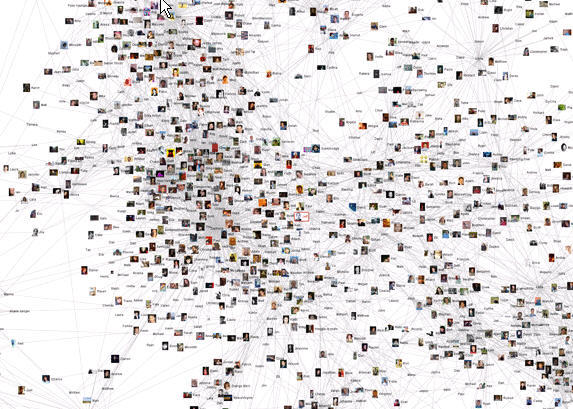
Vizster is an interesting application visualizing social networks developped by Jeffrey Heer and Danah Boyd from SIMS at University of Berkeley. Here is the paper describing their research.

via BayCHI

DMOZ, Google and monkeys

Interesting discussion in the comments to Dave Winer's post on DMOZ via OPML-newbies Yahoo Group

"There hasn’t been enough discussion about the fact that Google’s results have become more of a link popularity contest than a measure of content’s value. In an ideal world, the sites with the best content would get the most links. In reality, it’s common for insubstantial content at popular sites to get massively linked and overrated by Google, at the expense of a lot of good content that may not be sensational, trendy or snarky."

"It’s been said that if you give an infinite number of monkeys enough time, they’ll produce the works of Shakespeare. Google the output of these monkeys, and you’re likely to find a few classic works in the results. You’ll also find a lot of junk, though, that’s popular with the monkeys." [a commenter named Elle]

Monday, March 06, 2006

Getting Confusing everyday; Google Scholar and Thomson ISI's Citation Index

A recent paper by Daniel Pauly and Konstantinos Stergiou compared Google Scholar and ISI in few selected disciplines. via UBC Google Scholar Blog Their conclusion is

"Thus, GS can substitute ISI, which so far has a monopoly(with the possible exception of Elsevier's very expensive search engine, Scopus)"
I did some of the same citation searches in Scopus and I got different results. Good luck to the scientists who are looking for tenure or promotion based on their papers citation.If I were a scientist or researcher trying to figure how many times and by whom I have been cited, I would have said (to use one of my customer's words) that this whole citations metric system sucks.

postgenomic.com: Something fresh in STM

This is very clever. Like P&G, we (Elsevier) also should be looking outside of our walls for innovation.

Congrats to everyone involved with this project.

via Christina's LIS Rant


Google Scholar and Google Analyst Day 2006

Here is the Google presentation (pdf) to analyst via Geeking with Greg

Among their key strategic initiatives Eric Schmidt lists "building new products and service for information publishers". I am wondering what other exciting services are in the queue for publisher like us.

Jonathan Rosenberg , svp, product management, mentions "focus on the user and the revenue will follow" as their approach to problems. I would agree with him if we focus on the user, the success will follow too.

Jonathan also shows their product framework.
I was wondering why there was no mention of Google Scholar in this framework and where would GS go? under 70% or 20% where book search is?

Sunday, March 05, 2006

ipod and Talmud


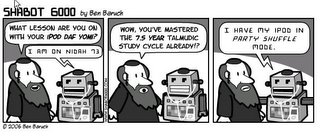
We saw how ipod is being used in the universities for learning or in the bars as DJ. Here is Ben Baruch's take on ipod and religion. Btw I think that Ben (and his Robot) is one of the funniest cartoonists around.


"Daf Yomi is the daily regimen of studying the Talmud, one page at a time. With 2,711 pages in the Talmud, it takes about 7 and a half years to complete. The practice, started in 1923, is now in its 12th cycle, which will end with Nidah in the year 2012 (5772)." via Shabot 6000

Time-out SUCKS

This was the subject of an email that I got from one Engineering Village user. And the student was absolutely right, if I were in his place I would have sent similar email.

Below you'll find some of the correspondance ( with his permission) that I had with this Student.
I think one of the beauty of this open conversation is at the end the customer who was initialy upset with your poduct is telling you how to enhance the product. In graduate school one of my proffessor's used to emphasize that we should "trust the process", my motto in product development and business has been "trust the customer, they will tell you what is right and wrong and help you to create a better product.

Another lesson for me: We all talk about "workflow" (and sometimes we abuse the term) and about integrating our products into the "workflow" of our customers. I wonder how many of us thought that lunch break was in the workflow of our customers.

Dear student, thanks again teaching us something new.


Here is some of the correspondance:

Hi there,
Sorry about the title but I'm a bit more than frustrated with the timeout window. After spending 1 hour going through 400+ articles the damned thing timed out when I took a break and I came back and they are all gone. Seriously, I can understand a timeout but how about something more than 10-15 minutes. How about an hour or two?
Sincerely,

I sent him an email explaining that after 20 minutes of inactivity user's session expires:

Hi Rafael,
Thanks for the reply. How about a check box that extends the timeout
period? Leave it for the default 20 minutes if not checked and extend
it to 1 hour if checked. That way the user is forced to make a conscious decision and only they can be held responsible for the extended timeout.
Just a thought,
Here is part of my response:

Thanks again for the excellent feedback. I'll check with our developpers to figure out how we can customize this. I'll let you know the outcome. Do you mind if I use these e-mail correspondace (without giving your name) in my blog as an example of having an open conversation with customers and how users can enhance products. If you have other areas that you feel SUCK in the product please let me know. We love getting these feedbacks to improve the product.. A question for you: Currently we provide RSS feeds and Blog This feature in the product......Thanks Regards
His final responses
Yeah, that would be fine but PLEASE don't use my name - admittedly, I was a bit harsh with my words.
Yeah the RSS feed and the Blog This feature would be pretty cool.

Nice work. I appreciate anyone that can keep an open mind and deal with the issues as opposed to viewpoints and politics.

P&G Transformation from R&D to C&D (Connect & Develop) innovation model

In a HBR article (subs req) Larry Huston and Nabil Sakkab who are vp for product innovation and knowledge and senior vp for corporate research and development respectively for P&G explains how P&G is transforming their innovation process by aiming to acquire 50% of their innovation outside of their company through implementing a "connect and develop" strategy.

Authors list yet2, innocentive, ninesigma, and yourencore as some of the sources that they rely in the open networks.

It would be interesting to know if there is any research to see if other corporations are moving in this direction in their innovation process.

Saturday, March 04, 2006

British (WellcomeTrust) to duplicate PubMed

"The UK version of PubMed Central would be launched early in 2007, said Kiley [head of systems strategy at the Wellcome Library] , and consist of three systems: a mirror of data already held in the US version (500,000 articles), a manuscript submission and tracking system, and an authenticated login enabling people to deposit articles."

"From October 2006, Wellcome Trust grant holders must ensure peer-reviewed articles are deposited in the UK or US version of PubMed Central within six months, either by themselves or the journal publisher. “If the
publisher cannot accept these conditions, grant-holders will have to publish
elsewhere,”Kiley said. “Our preferred route is open access" via Information World

Friday, March 03, 2006

Dream Information Machine for Generation Y

"When asked to describe a “dream information machine,” the groups consistently
imagined a machine that was a “mind reader,” that was “intuitive,” and could
determine their information needs without them having to verbalize them.
Clearly, both students and faculty realize the difficulty of verbalizing complex
information needs, and although they think themselves to be clear in their minds
as to what they need, they still wish there was some mechanism that could see
what they envisioned their needs to be instead of having to sacrifice accuracy
during verbalization.

This “dream machine” would also be a one-stop
source for information needs, using voice recognition and natural language to
search to return a comprehensive collection of information sources.
“Portability” and ubiquitous access 24/7 were also important qualities in such a
machine. It is difficult to imagine such a machine ever being developed;
however, the authors remarked on the similarity
between many of the criteria and a reference librarian
." [bolding is
mine]
from Information-Seeking Behavior in Generation Y Students: Motivation, Critical Thinking, and Learning Theory by Angela Weiler who is a Public Services Librarian, Coulter Library, Onondaga Community College in Syracuse, NY


Generation Y until we (online information providers or another start-up) came up with a product that is going to read your mind your best bet would be a librarian.

Thursday, March 02, 2006

British Library partners with Google Scholar or research articles

"Search results will be matched against the Library's holdings and where a match is made, users will have the option to obtain articles held via the British Library’s online document ordering interface, British Library Direct.
My question is are these holding just print holdings or on-line holdings too?
"Lynne Brindley, chief executive of the British Library, said: "By partnering with Google Scholar, the British Library will enable users to identify and locate relevant articles more effectively than has previously been possible. By linking results to our pay-as-you-go service, British Library Direct, we’ll provide a swift and easy means for them to have the items they require delivered straight to their desktop."
via Netimperative


Is peer review broken?

It might need improvements but I don't think it's broken. I will let my primary publishing colleagues to respond to this article by ALISON MCCOOK

In the article the Richard Smith, former editor of the BMJ says that peer review is a "lottery to some extent". via Israel Scholar Communication Scrolls

Tagging & Clustering Mix at Flickr

I found great value in presenting information in a clustered format. It seems that you can do clustering at Flickr too here is the results for Science and Librarian at Flickr via Bradrey Horowitz

Wednesday, March 01, 2006

ZoomClouds

ZoomClouds is another tag cloud application. You can also use Engineering Village RSS feeds with this tool. Check the right hand side for the latest nanotech results from compendex.
I like the way that they are doing their FAQ in a blog environment...