Thursday, November 30, 2006

Congratulations to Dr. Eugene Garfield for winning the lifetime achievement award

Eugene Garfield who is the founder and chairman emeritus of ISI and who is considered "father of scientometrics and bibliometrics" was honored by Online Information. Beside the research community both Thomson and Elsevier indebted to his "citation index" idea. via PharmaLive

Google and managing personal health information

There has been a lot speculation about Google Health, but if they can develop this, it can be excellent, probably would open a competely different indutry for Google, hospitals and health sector, where all the information is a mess.

"Patients also need to be able to better coordinate and manage their own health information. We believe that patients should control and own their own health information, and should be able to do so easily. Today it is much too difficult to get access to one's health records, for example, because of the substantial administrative obstacles people have to go through and the many places they have to go to collect it all. Compare this to financial information, which is much more available from the various institutions that help manage your financial "health." We believe our industry should help solve this problem." via Google

I can't figure out why I still have to enter my name and all the information in a piece of paper when I visit a doctor and then the same info to be entered by an administrator into the computer. Why can't I enter this info directly to the doctor's computer or may be in the very short future I can keep the info let's say in "My G-Health" and the doctors systtem uses the API and pulls the info.........

Good luck with this initiative to Adam and his team at Google.

Success by failure

Today I was chatting with a colleague of mine about new product development initiatives, corporate score cards and (to use the lingo du jour) innovation. We were saying that companies should experiment more with new ideas and should not fear by failure, they should be able to kill a project asap when they see that it's not successful. No need to keep funding because the idea was originated by a top senior executive. Google Answer (paid service) is a good example of this. They could not compete with Yahoo , and today they stopped the initiative which was started by Larry Page. It was not easy for Google to compete with Yahoo's free service. But what I like here, is that basically Google accepts that his competition is better in this service and they see no reason to compete with them just for the sake of competing.

I believe that the concept (Question & Answers) has a lot merit for information providers and especially within corporate environment. Another interesting company in this area is Yedda

Tuesday, November 28, 2006

Graduation day of a Colorado highschool in 2020

A video by Karl Fisch. A lot of Google domination, but why not? I like Google University part (2017) where students take course with no tuition fee, and ad revenue covers Google content acquisition. Who knows may be Google will acquire Reed-Elsevier in 2013 to start their content build up. via weblogg-ed

Search Results with images

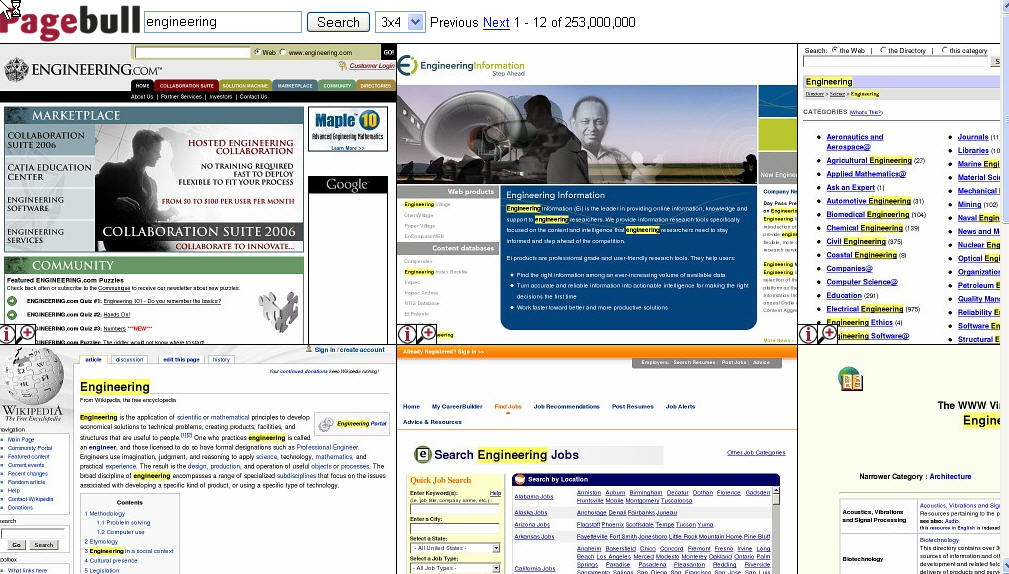
Pagebull is a new search service by Christopher Münchhoff that launched today

"It [Pagebull] is the first web search service to offer a full visual search experience. While other search engines such as Google, Yahoo or Microsoft present search results in text form, Pagebull shows images of the pages in the search results. Classic text results are available on demand, too. This way, a user can quickly evaluate the search results without the need to manually visit each result link." via Pagebull blog

Monday, November 27, 2006

ConnectBeam on ScobleShow

Puneet Gupta, CEO of ConnectBeam, who started JustStudents and CourseCafe more than a year ago, changed his company's direction during the year and had launched ConnectBeam few months ago for entreprise ."Connectbeam is enterprise-class social software for bookmarking, tagging and social networking. It can be delivered as an appliance or a software service."

You can get his views on "Enterprise 2.0" or " Office 2.0" and his company at the ScobleShow.

I had a very interesting dinner with Puneet in January where we were talking about new web applications. His bet on "social bookmarking" and ConnectBeam can be very valuable within corporations for collaboration and knowledge management. He is also a good example how one can change the product and create a brand new product in less than a year.

Reed Elsevier CEO's Presentation

I can't figure out why Crispin Davis' presentation on our priorities was not posted in our intranets, but thank fully William Walsh is around so I am aware of this. This is another example how we all learn sometimes from bloggers even about our own company's news. Thanks William

Sunday, November 26, 2006

Thank you Andy


Andy from Crazy Pistons saved us big time this past Saturday night when our 92 Golf stopped at Jersey City entrance towards Holland Tunnel. He gave us a jump to move the car to his building, then he gave us a ride to the Path station. Sunday morning when I went back to Jersey City he was outside and we chatted for few minutes about his bike club and their activities for non-profit organizations. Andy thanks again.

The car started fine in the morning but stopped again after I came out of Holland Tunnel. This time another guy helped me to push the car in front of Tribeca Cinemas. Finally AAA took the car to the shop. I am not looking forward to hear what the mechanic is going to quote me. It can be the end of an era for my two kids and wife who travelled in this car with no music for the radio was broken and no AC in the summer
But still we loved our green car.

Wednesday, November 22, 2006

Endeavor & ExLibris under one company

Elsevier's Endeavor was sold to Francisco Partners which had acquired ExLibris few months ago. Endeavor will be merged with ExLibris. via Yahoo

Tuesday, November 21, 2006

Intuit's success

I don't think that this will fly with my strategy colleagues and my managers, but I love when someone else states that:

" So any business plan I build will be based on gut instincts and experience.”
This is how Janna Eggers, Intuit QuickBase General Manager, is approaching to innovation at Intuit a $2.3Billion company.

"Despite her [Janna Eggers] focus on tying innovation directly to the product line, Intuit’s Eggers says she doesn’t worry about sizing the market or projecting revenue for a new product or feature....“[We talk] about figuring out what jobs you’re solving for and how painful they are. People get too caught up in, ‘What’s the market size for this?’ rather than saying, ‘Forget market sizes and product categories, and let’s look around for pains.’”via 360

That's what we need to figure out at Elsevier too: to find the pain points of our customers and churn out products (alphas, betas) to solve these issues

Monday, November 20, 2006

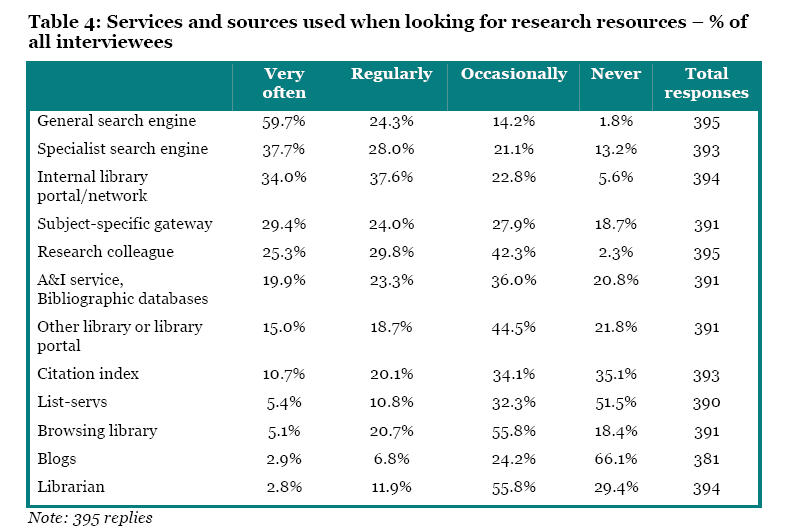
Study on academic researchers and discovery services in UK


Interesting report to read if you are providing services to academic researchers. Via Science Library Pad

You can download the report here

No suprise that general search enginers once again are most used services for research resources. Hence the reason why all the scientific publishers are letting the main web engines to index their journal content.

Yahoo, Peanut Butter & PR

I don't like peanut butter either but my take on this "leaked" memo is a bit different and Michael Eisenberg's puts it very well:

"I was impressed not so much by the content which was long on generalities and light on specifics but by the effectiveness of the new PR paradigm called the leak" via Six Kids and a Full Time Job

Interesting enough that no one is talking about the "ethical" aspect of this leak if this is a real leak?

Brad Garlinghouse states that Yahoo lost their passion to win. I don't know if they did or not, but in my books if you are not passionate with what you are doing just don't do it, find something else that you'll be passionate and be happy.

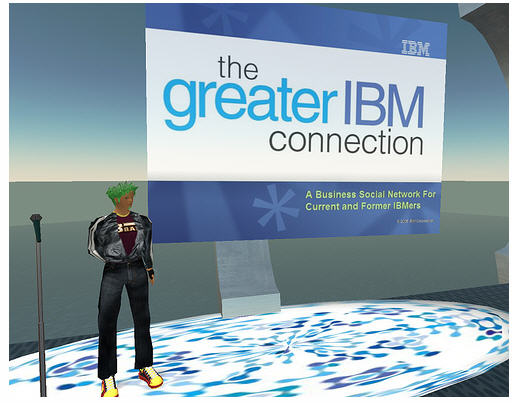
IBM CEO Sam Palmisano at Second Life announcing $100M investment to start incubate new business


link at ZDnet

Here is Irving Wladawsky-Berger, IBM's vice president of technical strategy and innovation:

"So, here we are in 2006, once more facing a set of fledgling technologies and capabilities -- massively multiplayer online games and virtual worlds – that are already being used by many millions out there. Once more we have the very strong feeling that this will have a huge impact on business, society and our personal lives, although none of us can quite predict what that impact will be. It will be fascinating to see where this ride takes us in the future. from Irving Berger's Blog

More on IBM's initiative at The Greater IBM connection

Thursday, November 16, 2006

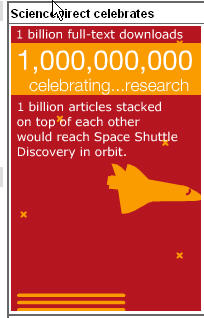
Another milestone for Elsevier ScienceDirect and research community


1,000,000,000th article was downloaded on November 14th at ScienceDirect

It would be interesting to find out who downloaded that article and have an interview with that person....

Tuesday, November 14, 2006

How to present? Provide handouts or not?


Here is my colleague Jeff Lash's suggestion:
via Communication Nation

I would not give even a white paper as usally people have something to write on...

Sunday, November 12, 2006

Social Networking for IT professionals, Engineers & Scientists


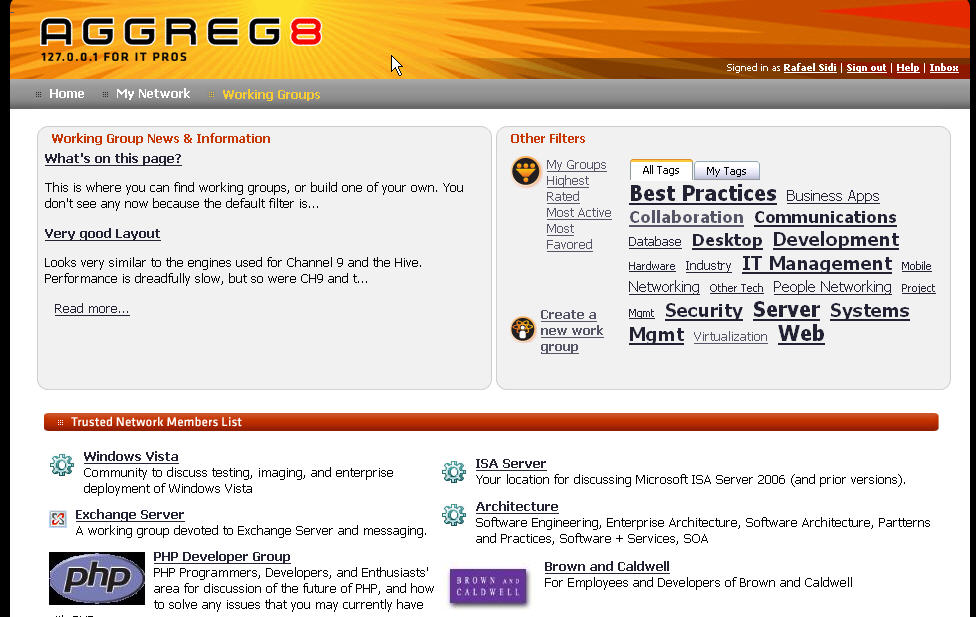
Microsoft launched Aggregat8 a "social networking and collaboration space for the IT community" and Global Spec officially announced CR4 Conference Room 4 "a forum for engineers, scientists and technical researchers to discuss engineering news, seek technical help and get answers to burning questions"

I still believe that as Elsevier we are best positioned to create a social networking environment for Scientists. We did it in 1995 for Ei Village but we were ahead on its time to fully implement the concept. Now it's the time (with broadband and ease of technical tools), we have to move on and just do it! At least experiment with it.


Here is an idea why don't we partner with Microsoft for this. They are also spending a lot of R&D money to enhance scientists workflow with new software solutions...

Web 1.0, Web 2.0, and now Web 3.0 hype and buzz

Here is some quotes from John Markoff's article in New York Times

"From the billions of documents that form the World Wide Web and the links that weave them together, computer scientists and a growing collection of start-up companies are finding new ways to mine human intelligence.

Their goal is to add a layer of meaning on top of the existing Web that would make it less of a catalog and more of a guide,,,"

"Web 2.0, which describes the ability to seamlessly connect applications (like geographic mapping) and services (like photo-sharing) over the Internet, has in recent months become the focus of dot-com-style hype in Silicon Valley. But commercial interest in Web 3.0 — or the “semantic Web,” for the idea of adding meaning — is only now emerging."


There are very interesting implementation for online publisher using semantic web like gopubmed. If you are interested in semantic web you may want to check the recent conference presentations from the 5th International Semantic Web Conference.

Today there are 890,000 results on Google for "web 3.0". I'll check this in a month and see how the buzz & hype is spreading.

Btw I am a leftover of Web 1.0 (1999) where we were trying to sell to teenagers hip items online without too much thinking that they did not have credit cards. At the other hand we had all the social networking and tagging concept working very well at Bolt.com

Web 1.0, Web 2.0 and now Web 3.0, we don't need any hypes

Here is some quotes from John Markoff's article in New York Times

"From the billions of documents that form the World Wide Web and the links that weave them together, computer scientists and a growing collection of start-up companies are finding new ways to mine human intelligence.

Their goal is to add a layer of meaning on top of the existing Web that would make it less of a catalog and more of a guide,,,"

"Web 2.0, which describes the ability to seamlessly connect applications (like geographic mapping) and services (like photo-sharing) over the Internet, has in recent months become the focus of dot-com-style hype in Silicon Valley. But commercial interest in Web 3.0 — or the “semantic Web,” for the idea of adding meaning — is only now emerging."


There are very interesting implementation for online publisher using semantic web like gopubmed. If you are interested in semantic web you may want to check the recent conferece presentation from the 5th International Semantic Web Conference.

Today there are 890,000 results on Google for "web 3.0". I'll check this in a month and see how the buzz & hype is spreading.

Btw I am a leftover of Web 1.0 (1999) where we were trying to sell to teenagers hip items online without too much thinking that they did not have credit cards. At the other hand we had all the social networking and tagging concept working very well at Bolt.com

Web 1.0, Web 2.0 and now Web 3.0, we don't need any hypes

Here is some quotes from John Markoff's article in New York Times

"From the billions of documents that form the World Wide Web and the links that weave them together, computer scientists and a growing collection of start-up companies are finding new ways to mine human intelligence.

Their goal is to add a layer of meaning on top of the existing Web that would make it less of a catalog and more of a guide,,,"

"Web 2.0, which describes the ability to seamlessly connect applications (like geographic mapping) and services (like photo-sharing) over the Internet, has in recent months become the focus of dot-com-style hype in Silicon Valley. But commercial interest in Web 3.0 — or the “semantic Web,” for the idea of adding meaning — is only now emerging."


There are very interesting implementation for online publisher using semantic web like gopubmed. If you are interested in semantic web you may want to check the recent conferece presentation from the 5th International Semantic Web Conference.

Today there are 890,000 results on Google for "web 3.0". I'll check this in a month and see how the buzz & hype is spreading.

Btw I am a leftover of Web 1.0 (1999) where we were trying to sell to teenagers hip items online without too much thinking that they did not have credit cards. At the other hand we had all the social networking and tagging concept working very well at Bolt.com

Web 1.0, Web 2.0 and now Web 3.0, we don't need any hypes

Here is some quotes from John Markoff's article in New York Times

"From the billions of documents that form the World Wide Web and the links that weave them together, computer scientists and a growing collection of start-up companies are finding new ways to mine human intelligence.

Their goal is to add a layer of meaning on top of the existing Web that would make it less of a catalog and more of a guide,,,"

"Web 2.0, which describes the ability to seamlessly connect applications (like geographic mapping) and services (like photo-sharing) over the Internet, has in recent months become the focus of dot-com-style hype in Silicon Valley. But commercial interest in Web 3.0 — or the “semantic Web,” for the idea of adding meaning — is only now emerging."


There are very interesting implementation for online publisher using semantic web like gopubmed. If you are interested in semantic web you may want to check the recent conferece presentation from the 5th International Semantic Web Conference.

Today there are 890,000 results on Google for "web 3.0". I'll check this in a month and see how the buzz & hype is spreading.

Btw I am a leftover of Web 1.0 (1999) where we were trying to sell to teenagers hip items online without too much thinking that they did not have credit cards. At the other hand we had all the social networking and tagging concept working very well at Bolt.com

Friday, November 10, 2006

Using You Tube for training

Brian Mathews who is an engineering librarian at Geogia Tech posted some videos showing different engineering resources.

The one with Enginering Village is titled "Where do I begin? Compendex!"

No more comment on that!Academia understand this, we need to educate corporate R&D engineers and planners that a search in Google or other search engines is not the right beginning, if you don't want to waste your time (and money) begin with Compendex. If you don't have a corporate license, don't worry, try the service with Day Pass. If you don't like it and don't find what you see let me know.

Thursday, November 09, 2006

Thomson (TechStreet ) partners with PartMiner

"Andrew Bank, Director of Business Development at Thomson Scientific said that “PartMiner and Techstreet share a common goal of delivering mission-critical technical information using the most intuitive, convenient and expedient methods. We are confident that this partnership will produce significant benefits for customers of industry standards and component data.” via Webwire

This move makes sense for Thomson, once they are in standards business why not move in into component data...

It's kind of funny that Partminer guys are in our building....(oops that's partsearch, not partminer)

Wednesday, November 08, 2006

Users are benefiting from the competition between Elsevier & Thomson


One of the conclusions of Garry Harrocks' comparison of Scopus and Web of Science is that "intense competition has bred innovation in author profiling and citation analysis" Via Dana Roth

I would be very interested to see if my colleagues at Scopus or Web of Science team will respond to Garry's observations.


According to Garry, one of the new features that WOS will introduce is the h-index.

Tuesday, November 07, 2006

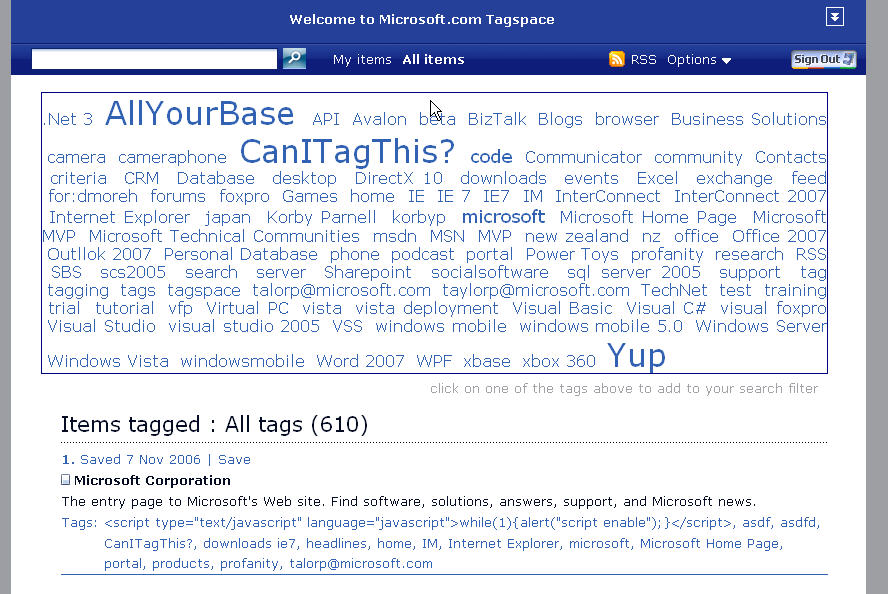
TagSpace from Microsoft

"TagSpace is all about giving you, the consumer of content on Microsoft.com and associated sites, the power to identify, define, catalogue, and share what interests you, in ways that make sense to you. "

More on this project here

Got Questions on Benefit of Blogging?

If you need to convince or encourage your CEOs or managers to blog show this communication between Sun's CEO Jonathan Schwartz and SEC Chairman Christopher Cox

"As you are aware, I believe strongly that the Internet is a powerful tool that can be used effectively by corporations and all market participants to provide information to the market and investors. The Internet can empower investors to obtain and evaluate information about companies, and its potential has not yet been fully exploited. Today, many companies maintain websites on which they post their annual and periodic reports, press releases and other information of interest to investors, customers and other persons. The Commission has recognized the importance of corporate websites and the Internet in providing important corporate information and developments to the market, both in connection with capital raising and disclosing ongoing corporate developments. Since Regulation FD was adopted in 2000, significant advances in information and telecommunications technology have occurred that have dramatically increased Internet use by businesses, consumers, investors, and government agencies. These advances have transformed the Internet into a primary means for the rapid dissemination and retrieval of information. Technology now plays an integral role in timely informing the markets and investors about important corporate information and developments."

More on SecondLife

Honeyweell's and Minnesota's "Nothstar Nerd" has put some nice links that give a good overview on Second Life.

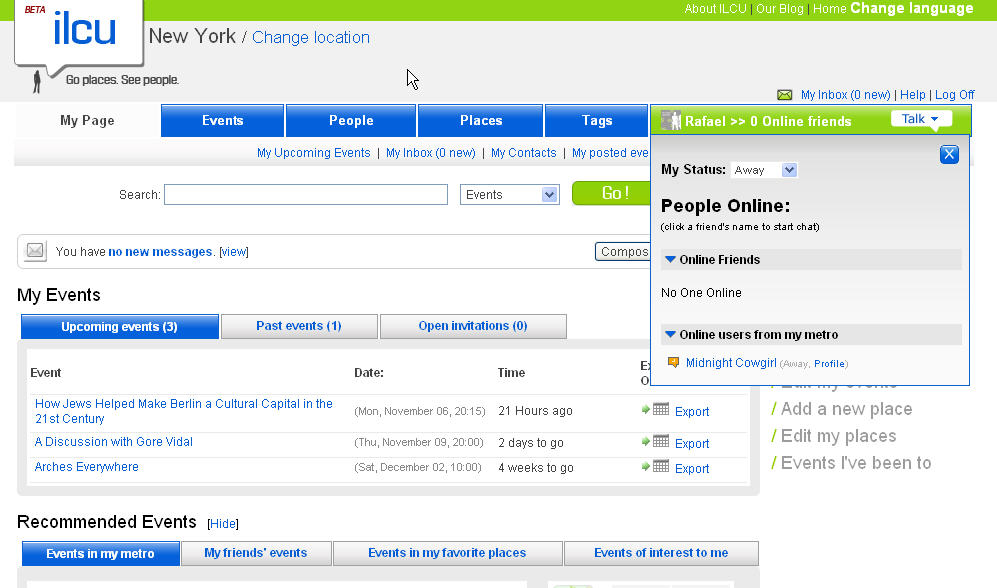
I'll see you (ILCU)

"ILCU is a gigantic network of hip-happenin' things to do and people to do them with in your free time. We created ILCU to fill the gaps in our social calendars with stuff and people that make us happy. Sure there are lots of event sites online: you can see events, but you have no idea who's going. With ILCU, you can see both."

I wish that they had a category for conferences, so if I am scientist and going to a conference I can see who else is coming too.

Friday, November 03, 2006

Father, Son, Cheese and Kraft's Open Innovation

My father use to own a grocery/charcuterie store before he got involved in textiles. His store was in Kuzguncuk which is one of the most beautiful places on Boshporus. Being a grocer, he knew a lot about cheese and he thaught it to us too. His favorite cheese was "Kasar Peyniri" which I love eating too. For him picking a good cheese was like an art. My son who will be 5 in few weeks, is a fan of Kraft cheeses which I would put in the category of junk cheese or low quality cheese. I don't understand what he really likes with Kraft cheeses but as the french saying goes "les gouts and les couleurs ne se discute pas".

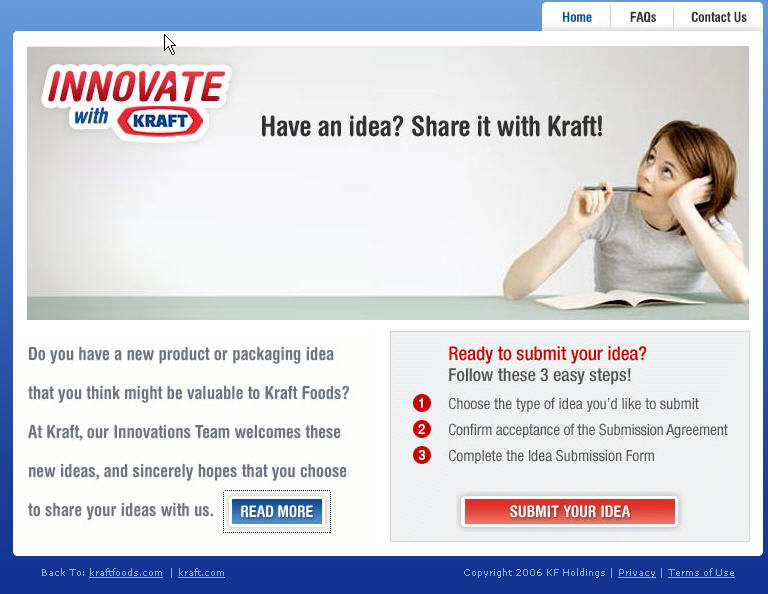
I am kind of encouraged when I read Kraft's Open Innovation project for future of Kraft cheeses.

Mary Kay Haben is leading Kraft Open Innovation project. Here is a excerpt from her interview in Fortune Innovation Forum why they embarked on an Open Innovation project. via Fortune Innovation Forum

" Recently Kraft embarked on an ambitious Open Innovation Strategy to augment and transform our innovation efforts. The purpose of Open Innovation is to better enable the organization to receive ideas from the outside and connect with potential external alliance partners. The expected outcome is improved speed to market, improved R&D leverage and hopefully more breakthrough innovation. Kraft is soliciting outside ideas against articulated needs (i.e. we search for stuff we know we want or need).
Mrs. Haben here is an idea: why don't you start producing a cheese like Kashkaval.
On the other hand, I really like the way that your company is being open to new ideas from outside. It would be great if we can introduce something similar in Elsevier....

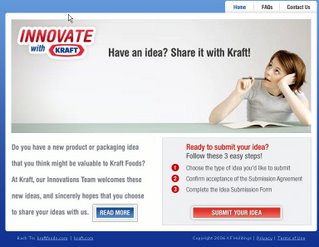
If you have an idea for Kraft go to Innovate With Kraft website and send your ideas.
Simplicity wins.

Innovation in publishing companies

Richard Charkin who is the CEO of Macmillan publishing provides some insight to Macmillan's innovations:

"At Macmillan we try to encourage innovation by devolving responsibility to small creative units. For instance Palgrave Macmillan has set up a three-person team to help us identify new opportunities in academic and textbook publishing and then take them to market. " via Charkin Blog
I can't agree more, keep the teams to a minimal number, cut-off the bureaucracy and forget creating a large group for the sake of involving all the parties of an organization so that the large group can produce a creative idea. When you have large groups you go into "brainstorming" mode and the result can be delays in the whole process and a mediocre output.

"I can't remember a single instance where a group produced a really creative idea," John Clark a former university dean of engineering(WSJ sub req)

Richard also touches why large publishing companies are struggling with innovation:

"Albatros 4; Profile 16; Faber 82; Bloomsbury 271; Informa 7000; McGraw-Hill 18,000; News Corporation 30,000; Pearson 32,000; Reed Elsevier 37,000; Thomson 40,000, Bertelsmann 93,000. [number of employees] The conclusion was that size is not in itself an inhibitor nor a catalyst for innovation in publishing although the larger (and more publicly owned) the company the harder it is (obviously) to remain nimble and innovative."

Another interesting note in Richard's post is since January he had 276,172 visitors to his Blog. This is another reason why I am saying in this blog and internally at Elsevier that our CEOs and senior managers (and all employees) should use blogs to communicate and share their thoughts on the industry, their expertise and knowledge and personal "real life" stories with the market and customers.

Btw I should also say that even though at Elsevier we don't have a formal blogging policy for employees, no one "dropped the hammer" on me. My colleagues and senior managers including my direct manager have been all supportive.


Thursday, November 02, 2006

Results of Elsevier's study on the effect of R&D Information Tools on Research Success


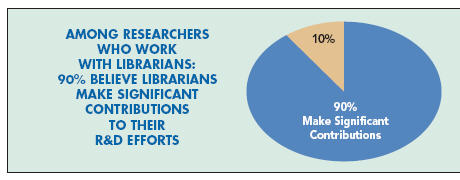
In May 2006 Elsevier commissioned Martin Akel & Associates to conduct an independent study among researchers in the corporate market to determine
a) how the R&D environment is changing
b) whether there is a correlation between access to paid information and research success
c) how Elsevier's research tools were perceived compared to other providers
d) and find researchers' opinions of the contribution of information professionals to the R&D process.

You can get the highlights of the study here (pdf). The full report is also available in pdf format.

We would like to get your input on this study. Please use the comment link of this post for any questions, feedback, comments that you have on the study.

Also please submit any suggestions that you have for future studies. This study was a follow up on "The Role of Information in Innovation" study that we did in 2005.

Visualization at the search results page


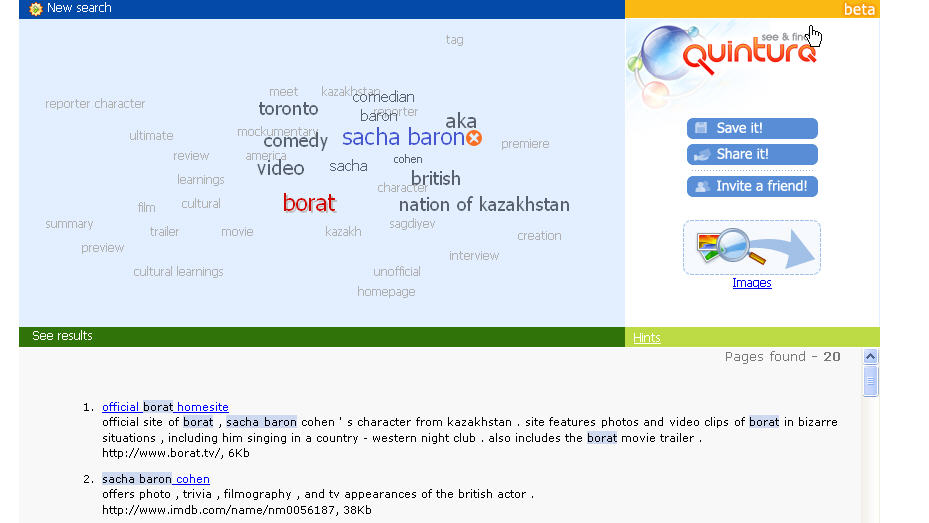
Quintura visualizes search results by their new visual Find Engine. Using the Quintura Clouds one can refine search results easily.

Quintura team is lead by Yakov Sadchikov who studied economics in Kazakhstan Institute of Management. Here is the search results for Borat
at Quintura.

Wednesday, November 01, 2006

New Zealand government encourages companies to collaborate

In a speech to New Zealand Metals Industry Conference, Hon. Trevor Mallard, New Zealand Minister for Economic Development emphasizes on collaboration:

"How do New Zealand engineering companies succeed overseas? One success factor is working in numbers, in a collaborative approach."

Your Honor, subsidize or support NZ engineering companies to access to quality scientific literature like Engineering Village and you will see an increase in the success rate of their R&D efforts..

Time to switch from information provider to "knowledge provider"

Users -at least knowledge workers- are not interested just getting information, they want to get intelligence and acquire knowledge when they use a paid search product. Ramano Rao who was the founder of Inxight got the right idea for beyond search: REAP

"Retrieve — collect information from a variety of sources
Extract — extract data, facts, examples
Arrange — arrange documents and facts for use now or later
Present — compose information into artifacts of value"

Nature publishing buys an Island, the rest of the STM publishers are still rowing the dingy

Nature makes another speed boat move and dive into Second Life. It seems that Nature became the first major STM publisher which bought an Island in Second Life and experimenting with it. Kudos to them. Other big publishers like us (Elsevier), Thompson, Wiley are still thinking if, what, and when they should do something in Second Life which has over 1.2 million residents and some of them our customers. If you are interested in Second Life you may want to check Hive7 too.

Nature's island is called "Second Nature"

If there is another STM publisher in Second Life please let me know.