Showing posts with label API. Show all posts

Thursday, April 05, 2012

CodeForScience Turkey

Glad to host the first CodeforScience event in Turkey.

If you haven't seen yet, checked the new Lipid Structure App at ScienceDirect and Scopus. It's a great example how an "open platform" can create domain specific solutions collaborating with scientific community. These are still first steps for what we are creating for a new scholarly communication and discovery platform...

Tuesday, November 01, 2011

Vision in co-creation solutions and future of STM research platforms

Today we've reached another milestone in our SciVerse and Application Marketplace and Developer Network initiatives.

When we started these initiative a few years ago our goal was very clear: accelerate science and help researchers do research better. We needed to create better knowledge discovery solutions (KDS) for scientists and researchers. We aimed to do this by collaborating with research and librarian community. We needed to enrich our content. We needed to connect from literature to data in a more intelligent and contextual way. We needed to make our content more interactive, more discoverable and accessible. We needed to create domain specific research tools. We wanted our users to customize the tools that they want to use. We wanted to let researchers create custom solutions. We also knew that we could not develop all these solutions ourselves. We believe in non-invented here. We needed to connect, collaborate and co-create these tools with scientific and research community. We needed to provide a flexible platform and services for the scientists who told us that they wanted to use our content their way. We needed to change how scientific research solutions were created. We needed to help research community to build solutions that they want and they need.

Hence we've built an application framework -a platform- where now we can introduce a new feature Author Wordle app in just 8 hours. (Talk about agile development in STM market and "turning products into platforms".)
We've started reaching out and collaborating with researchers and scientific community by doing hacks and challenges at New Jersey Institute of Technology , Rensselaer/Tetherless Worls Health, University of Sydney, National University of Singapore, Dalhousie and Tsinghua Uiversity.
We've reached out to librarian community with AppsforLibrary to get their input on what kind of solutions they want to see in our SciVerse platform.
With AppsforScience we've asked developers community to build search and discovery solutions using our content and APIs.

We can't thank enough to all the individuals(students, developers, researchers, librarians, corporations) who participated to these events and brought their creativity in building solutions and developed apps that are being shared in SciVerse platform with the global research community. All these individuals are the"first settlers" of what is called a distruptive platform and embraced the vision that we set for future research platforms.

Today's announcement of AppsforScience winners is a great example of co-creation of these solutions with the developers community. Congratulations to Altmetric developed by Euan Adie, Refinder developed by Leo Sauermann , iHelp developed by Mourougane Arumugam, Keyword Optimizer developed by Scott Fortmann-Roe and ChemDetect, developed by Keming Labs.

Go and use these new apps and other apps that we have in our gallery. Send your appreciation to the developers. Send us and developers your feedback
Enjoy!

Saturday, February 05, 2011

Elsevier's First Hackathon

Glad to be part of another "first". Many thanks to NJIT in believing in the idea and being a great partner in this initiative, and all our guests Mike Taylor @miketaylr, Bastian Hofmann
@BastianHofmann.
Follow the event at @sciversedev and @njithack

Tuesday, December 14, 2010

Believe in the Apps, and set your API product vision


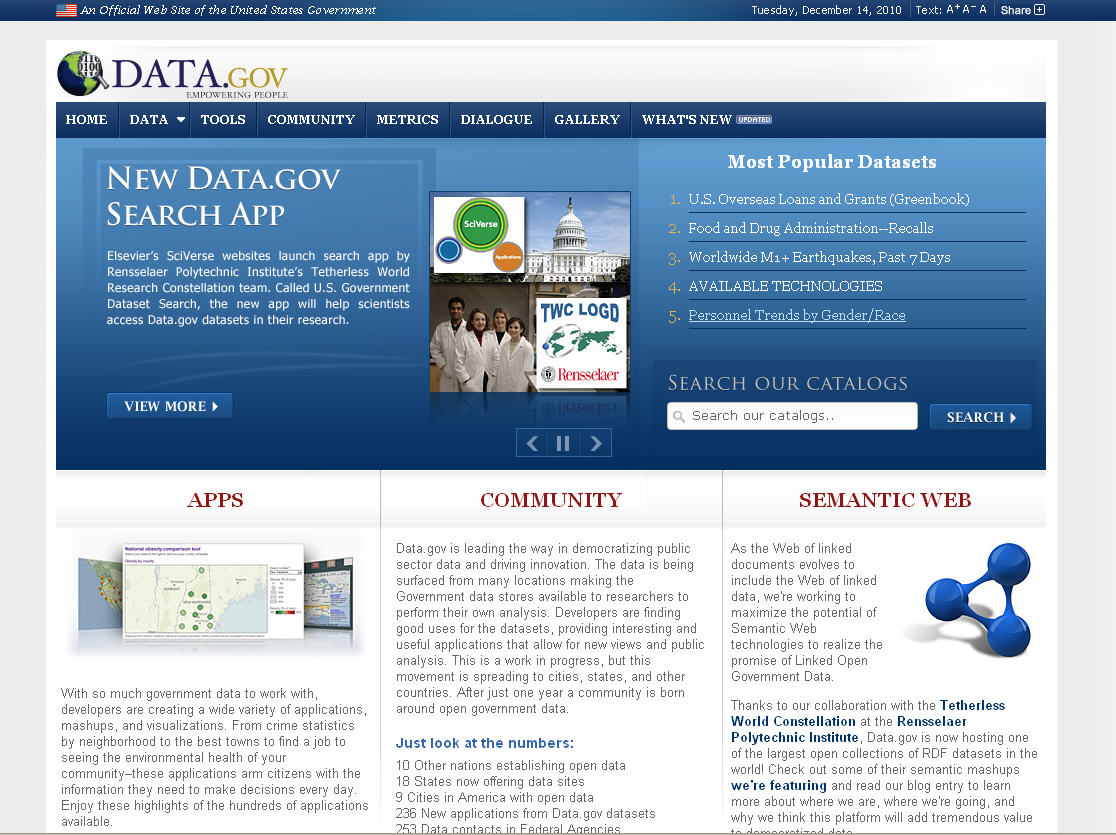
The app that RPI TWRC team built for our application marketplace is featured at data.gov site.

Saturday, November 13, 2010

Change is here: Elsevier's Applications Marketplace & Developers Network


Finally all the API, opening up, open up applications, mashups, applicationmarketplace, widgets tags that you have been seen in the past few years came alive early Sunday morning, go check-it out

This is a new publishing ecosystem and a new innovation playground for the whole developer community -researchers, librarians, scientists, developers, start-ups- go start coding, collaborating, innovating to create apps that will help the scientific and research community.

Exciting and appy times

Wednesday, September 01, 2010

SciVerse

This is just the beginning of a new journey....

Wednesday, April 28, 2010

Listen to scientists

Open Data Protocol

Another initiative from Microsoft for research community Web N-Gram

Success stories for OpenCalais, British Library is among the sites using OpenCalais

Scientist's workflow in today's STM environment:

"One would think that in today's information age, scientists can easily keep up with new discoveries. However, these discoveries are buried in 24,000 journals most of which cannot be accessed by the individual scientist, because his/her institution does not subscribe to them. Thus, in order to keep current, here's what I have to do:

1. Pick ten, fifteen or so journals I have access to and which have a reasonable chance of publishing something important in my field and read their tables of contents religiously
2. Go through stored PubMed keyword searches (even though PubMed is ~4 weeks behind publication date)
3. Read F1000 alerts
4. Subscribe to 3-4 mailinglists on which some helpful person posts press-releases in close enough fields
5. Screen citeUlike recommendations and FriendFeed subscriptions for interesting papers
6. Subscribe to science news wires
7. Listen to science podcasts"Via bjorern brembs

Friday, December 04, 2009

What's your API?

Create new business opportunities and empower your users through "open APIs"

Sunday, October 18, 2009

Wolfram Alpha and Australia Government Open Up

Wolfram Alpha recently launched their WebService API. Currently they are charging for the use of APIs. It will be interesting to see how the developer community from universities will react to these fees. Wolfram Alpha team deserves credit providing APIs to their curated content in such a short period after the launch of
Wolfram Alpha.

Similar to the efforts in the US and UK, Australia government starts making government datasets publicly available.


Tuesday, September 15, 2009

Applications will be "new content"

Good initiative by the US General Services Administration

Open is always better than close
, dataliberation

Once you provide the APIs, users will build interesting applications

Saturday, August 01, 2009

Research community developing kick-ass applications


bibapp is a great "collaboration" example by two universities' "researchers" in developing an useful "application" for the "research community".
BibApp is a simple and good implementation of many concepts that are being discussed probably within some STM product development teams. Here is a "small team" using "open source software", and voila....

Wednesday, June 10, 2009

What's your (STM) openness strategy?

Here is Yahoo's

The Yahoo! Openness Strategy Team is building the next generation of open platforms and integrating them into every part of Yahoo!. From platforms that add a social element to every aspect of Yahoo!, to an applications platform and developer-focused offerings, the YOS team is tasked with transforming the way Yahoo! works. In building out all the components of YOS, the team is focused on implementing distributed systems that are highly scalable and performant so they can reliably serve hundreds of millions of Yahoo! users and developers every day. Via Yahoo
UK government goes to Tim Berners Lee to help them in their initiative to open up the government data.

Monday, April 13, 2009

World Bank releases Open APIs


and invites community to creats mashups and applications

"The World Bank has been collecting massive amounts of data, for the past 50+ years, and now possesses one of the richest repositories of information about economic development in the world. World Bank Open API is an initiative of the World Bank that opens the wealth of the World Bank's global economic data to the outside world, in a standard, easily accessible way. Open API allows third parties to develop mash-ups and applications with the World Bank data and easily create different kinds of interesting visualizations and insightful reports." via world bank

Friday, April 03, 2009

Recommendation with textual auras

Sun's Aura Project released The Music Explaura. The beta project is using Last.fm, Spotify, Wikipedia, Flickr, Youtube, Yahoo, Musicbrainz, Upcoming, The Echo Nest and Amazon's APIs . The system also takes a different approach to recommendation: "AURA system computes the similarity between artists by computing the similarity between their textual auras." Via Stephen Green

Thursday, April 02, 2009

Remixing in science


Here is how remixing can be "fun" in science. Another innovative thinking by Jean Claude Bradley and Andrew Lang


note: Image updated

Remixing and Creativity (and APIs)


Ofir Kutiel gives a good example of how one can create something original by remixing "content"