Economy is crashing, apps are smashing
Just believe in the process....a brief summary of 2011

What a year, 100+ solutions "built by researchers for researchers" in an STM platform and what an effort in the last two months of our team and the developers creating these solutions.
Many thanks to everyone -students, librarians, developers, researchers, scientists- in participating in this new ecosystem and bringing your innovations and solutions.
Happy 2012.
 Just in case my wife took picture of this doubled parked van, so if it hits our car we know where to go
The first thing that Kim Jong Eun needs is a presidential haircut.  Just stop by at Royal barber shop in East Village where all the barbers are from former Soviet Union
If you are interested in our new solutions that we've releasing continuously in Elsevier's applications marketplace check the apps gallery Thanks to all our developer community members!
 Today we've reached another milestone in our SciVerse and Application Marketplace and Developer Network initiatives.
When we started these initiative a few years ago our goal was very clear: accelerate science and help researchers do research better. We needed to create better knowledge discovery solutions (KDS) for scientists and researchers. We aimed to do this by collaborating with research and librarian community. We needed to enrich our content. We needed to connect from literature to data in a more intelligent and contextual way. We needed to make our content more interactive, more discoverable and accessible. We needed to create domain specific research tools. We wanted our users to customize the tools that they want to use. We wanted to let researchers create custom solutions. We also knew that we could not develop all these solutions ourselves. We believe in non-invented here. We needed to connect, collaborate and co-create these tools with scientific and research community. We needed to provide a flexible platform and services for the scientists who told us that they wanted to use our content their way. We needed to change how scientific research solutions were created. We needed to help research community to build solutions that they want and they need.
Hence we've built an application framework -a platform- where now we can introduce a new feature Author Wordle app in just 8 hours. (Talk about agile development in STM market and "turning products into platforms".)
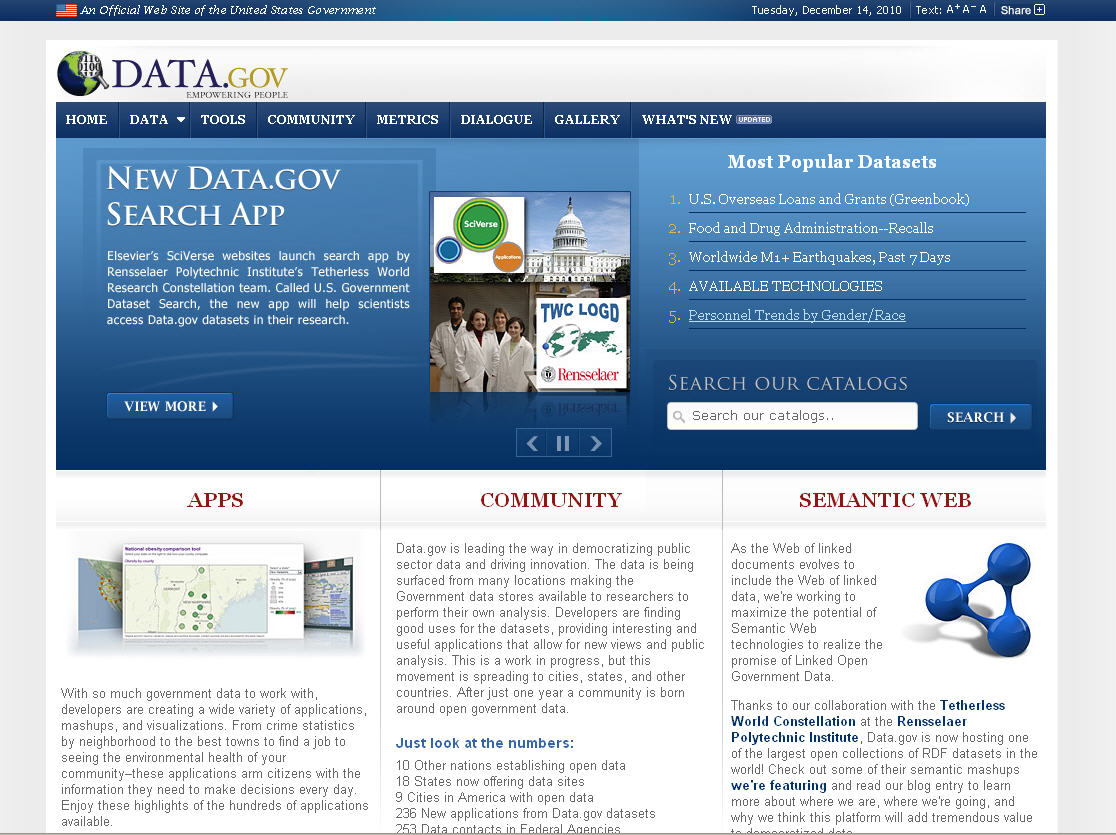
We've started reaching out and collaborating with researchers and scientific community by doing hacks and challenges at New Jersey Institute of Technology , Rensselaer/Tetherless Worls Health, University of Sydney, National University of Singapore, Dalhousie and Tsinghua Uiversity.
We've reached out to librarian community with AppsforLibrary to get their input on what kind of solutions they want to see in our SciVerse platform.
With AppsforScience we've asked developers community to build search and discovery solutions using our content and APIs.
We can't thank enough to all the individuals(students, developers, researchers, librarians, corporations) who participated to these events and brought their creativity in building solutions and developed apps that are being shared in SciVerse platform with the global research community. All these individuals are the"first settlers" of what is called a distruptive platform and embraced the vision that we set for future research platforms.
Today's announcement of AppsforScience winners is a great example of co-creation of these solutions with the developers community. Congratulations to Altmetric developed by Euan Adie, Refinder developed by Leo Sauermann , iHelp developed by Mourougane Arumugam, Keyword Optimizer developed by Scott Fortmann-Roe and ChemDetect, developed by Keming Labs.
Go and use these new apps and other apps that we have in our gallery. Send your appreciation to the developers. Send us and developers your feedback
Enjoy!

A full day of creativity from scientists all over the globe showing us the amazing applications that they can develop to "accelerate science" once the content is "opened up".
Deepak announced Amazon's Amazon Public Data Sets program. This is another good initiative for "open data" and for scientists

As Wouter posts opening up is important for us. I believe that this "change" will have a huge impact for "accelerating science" and "helping scientists do science better. That's one of the reasons that I am proud working for Elsevier and be part of a product development team that will launch some great solutions in the coming months.

BrainNavigator is a new product that we are unveiling at SfN. This was developed in partnership with the Allen Institute for Brain Science. Elsevier Labs and Elsevier Book Publishing division have done a great work on this.
As my colleague Johannes Menzel states "BrainNavigator will change the way Neuroscience research is conducted".
In STM online publishing the buzz has been around "workflow". If you really want to see a workflow solution, you need to check this product out. BrainNavigator is one of the best examples of the workflow solution for researchers.
After the Grand Challenge, Elsevier Article 2.0 is another initiative in "user contribution"

While developing products people are after simplicity but is simplicity overrated?
JOVE reaches a milestone by being indexed by PUBMED and MedLine. Congratulations to JOVE team and our own Tyge Burgess for creating short video abstracts in YouTube for Journal of Number Theory.
Opening-up is good for science and product development. Here is how friendfeed science community is responding Connotea's call of figuring out a freemium service and how Yahoo Search is integrated in iphone . Searching images made easy by Yale Image Finder
Anthony Williams who was with ACD/Labs and we did some work together for ChemVillage, continues improving his ChemSpider platform.
Nature publishing launches another experiment by attaching a wiki to a journal article and Max Max Planck Society covers publication fees for PLoS journals.
 "BioLit aims to extract database identifiers and rich meta-data from open access articles in the life sciences and integrate that information with existing biological databases.

Today, ScienceDirect has over 9, 000, 000 articles. As my colleague Paul indicated late last night "SD counter" was at 8,999,991 on 00:16 AM CET on Friday 20 June. Congratulations to everyone who contributed to this milestone.

 Posts
All Comments